Journey to Longka
TELEMIDI · COLLABORATIVE GAME DESIGN CONCEPT
Two players. Two instruments. One shared journey.
Five-second interface concept demonstration from our presentation.
What if music could turn distance into a shared experience?
Our concept is a two-player online adventure where people in different locations make synchronized music to progress through the same story. We wanted connection and cultural discovery to happen through play.
A story you build together.
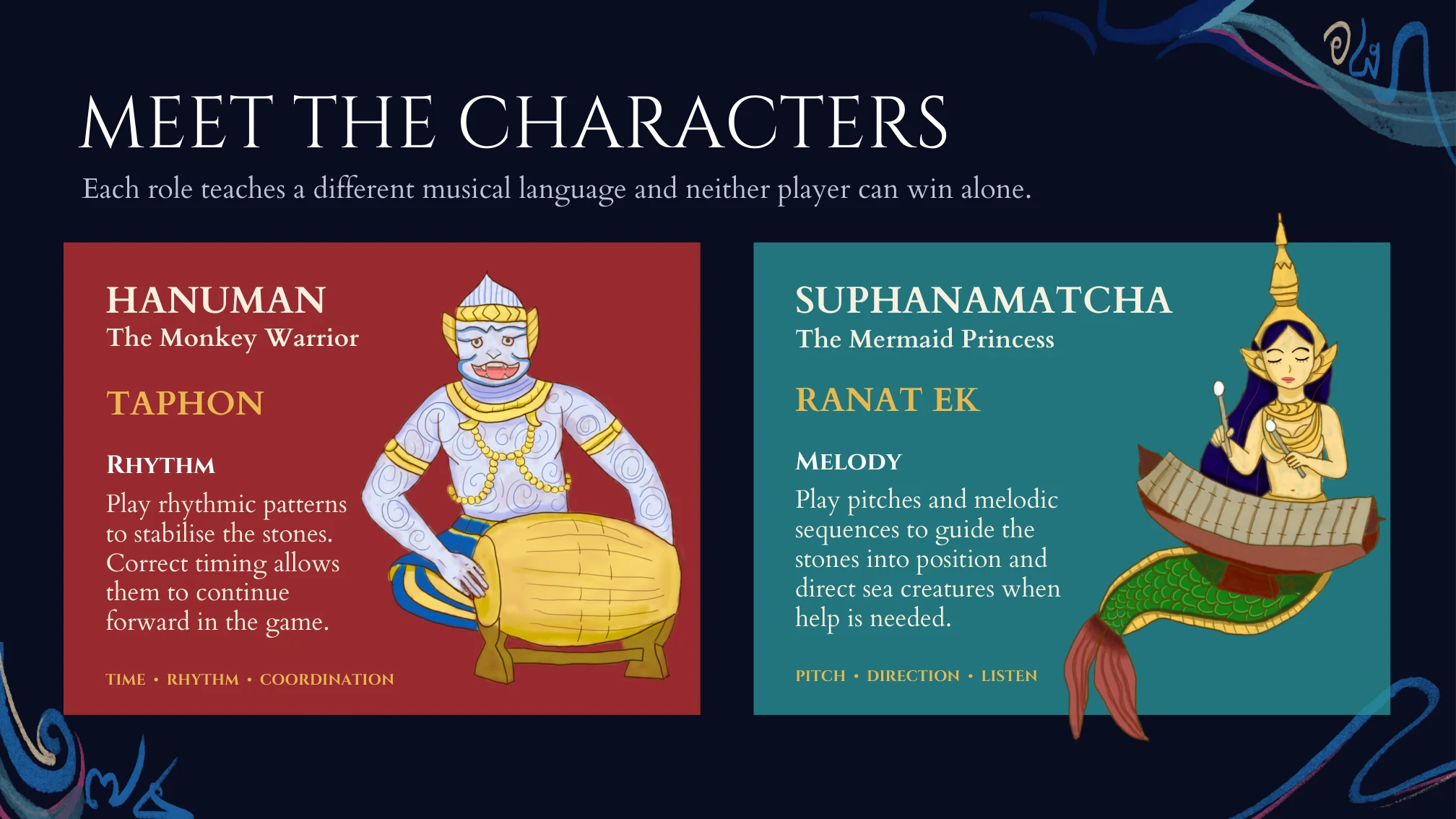
We chose the Ramakien episode about constructing the causeway to Longka. Our game adaptation follows Hanuman and Suphanamatcha as their relationship moves from conflict to cooperation.
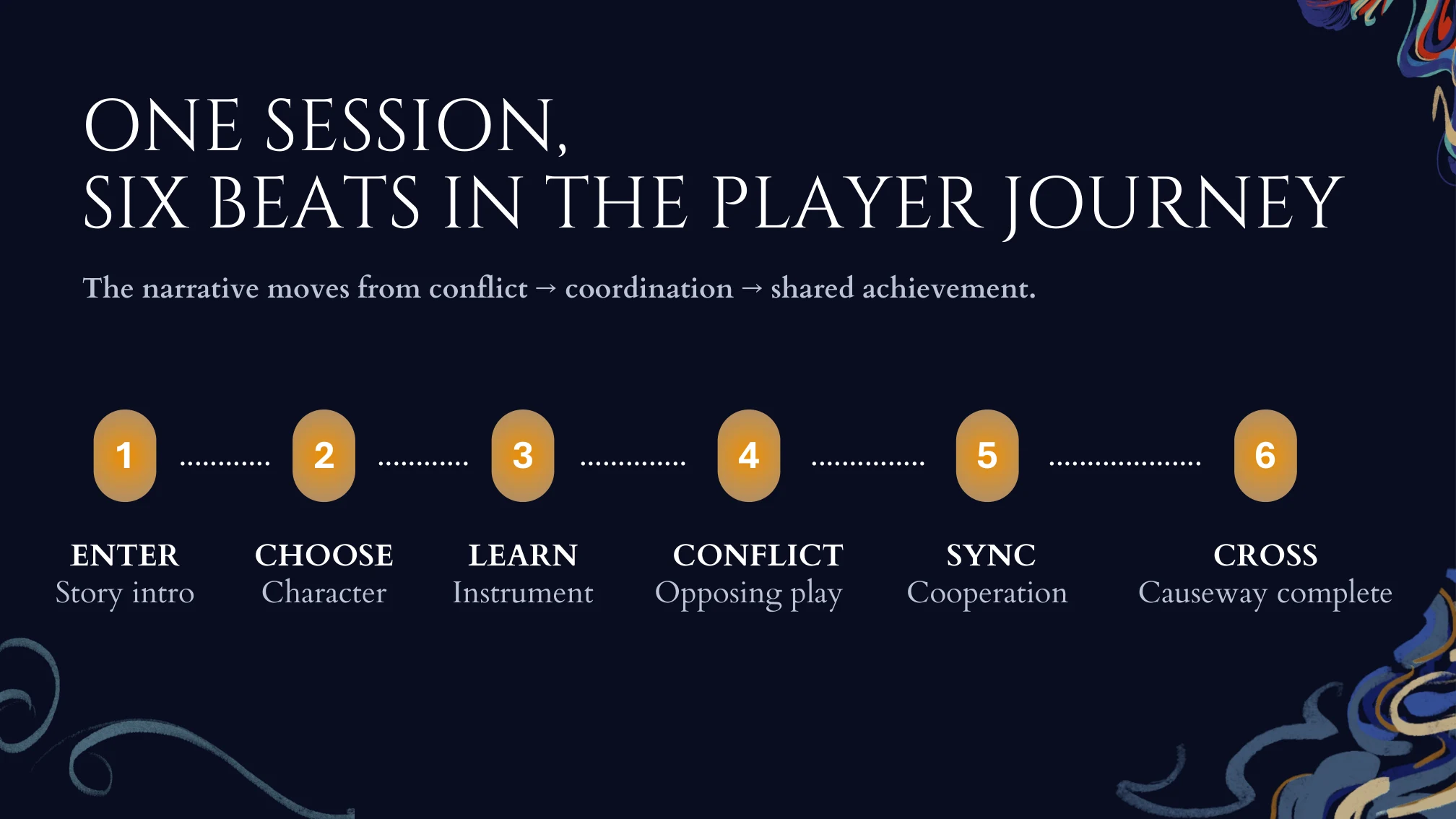
Listen. Coordinate. Cross.
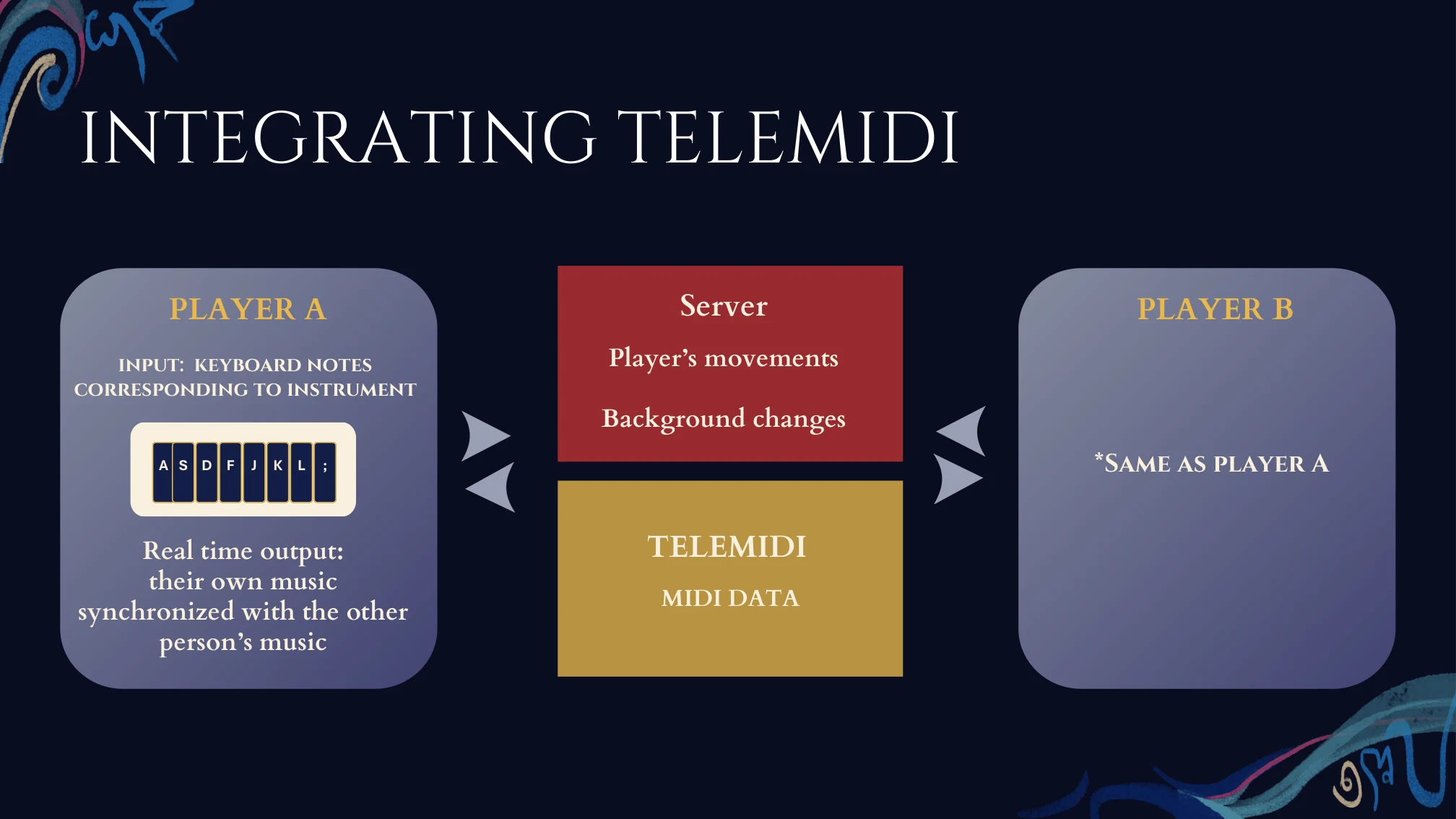
Neither player can progress alone. Matching rhythm and melody moves the environment and completes the causeway. Familiar keyboard controls echo the instruments’ physical interactions, with cultural context introduced through character selection.
Making distance part of the design.
Our proposed architecture places Telemidi alongside the main game server. Musical inputs would travel as MIDI data to the other player, while local visuals provide timing feedback. The aim is to reduce the role of network delay in the musical interaction; this is a proposed integration, not a measured performance result.
The complete concept.
The original deck’s strongest moments are laid out as a visual trail, so the idea can be discovered without clicking through one slide at a time.
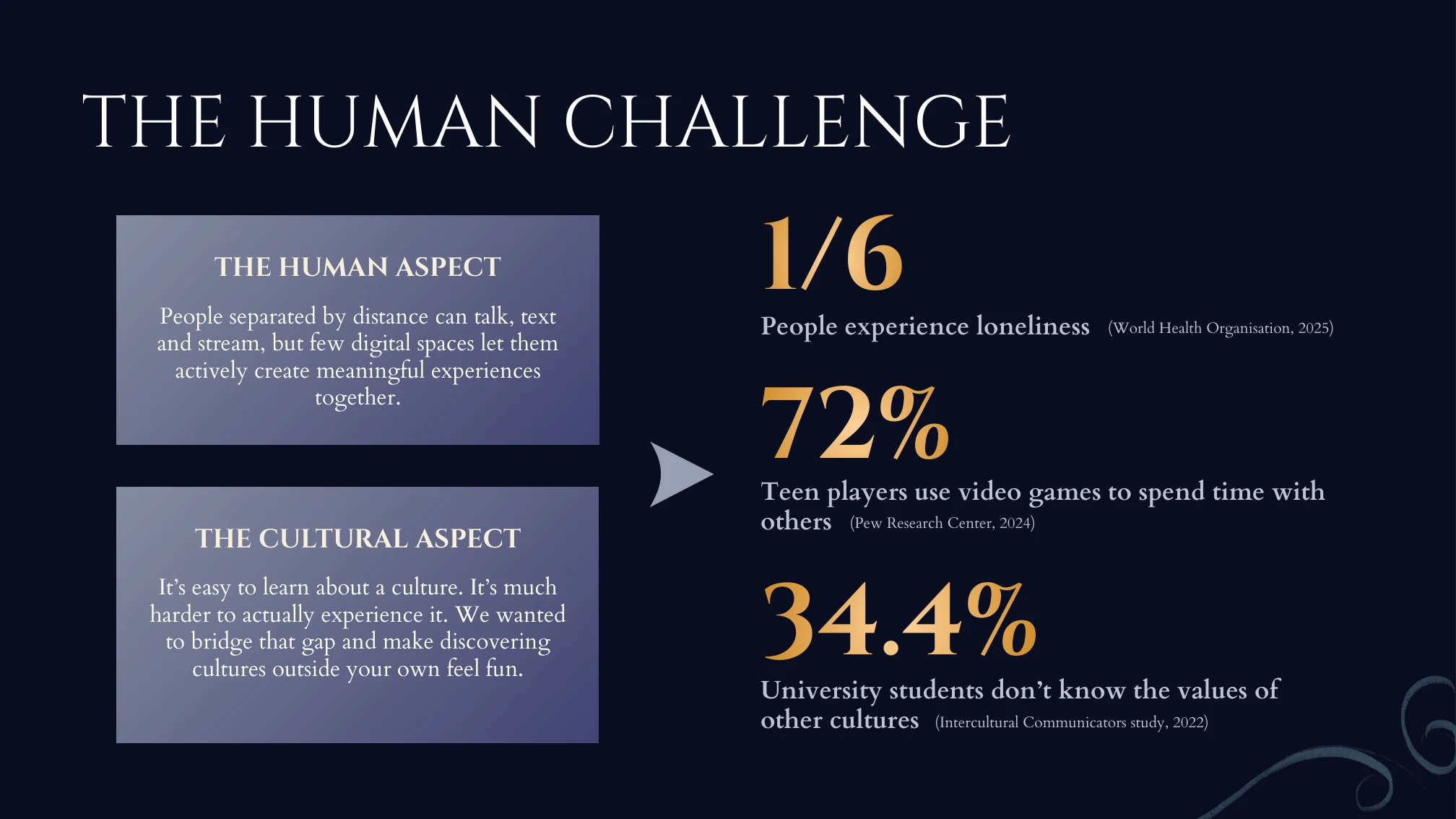
Distance, loneliness, and cultural access frame the opportunity the team explored.
The proposed experience connects two people through synchronized music and a journey through Thai culture.
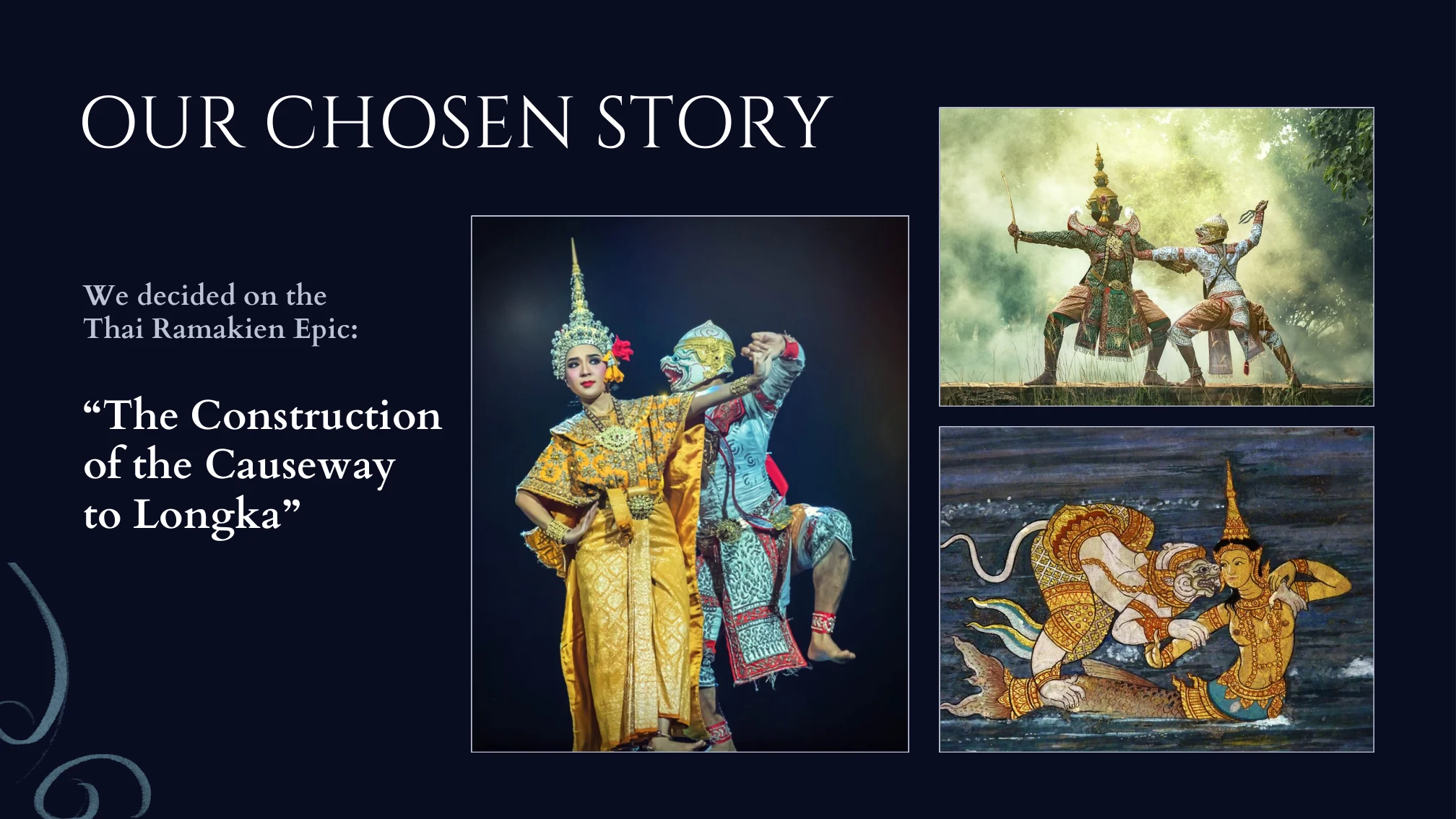
The Ramakien episode gives cooperation a narrative purpose and turns the journey into something both players shape.
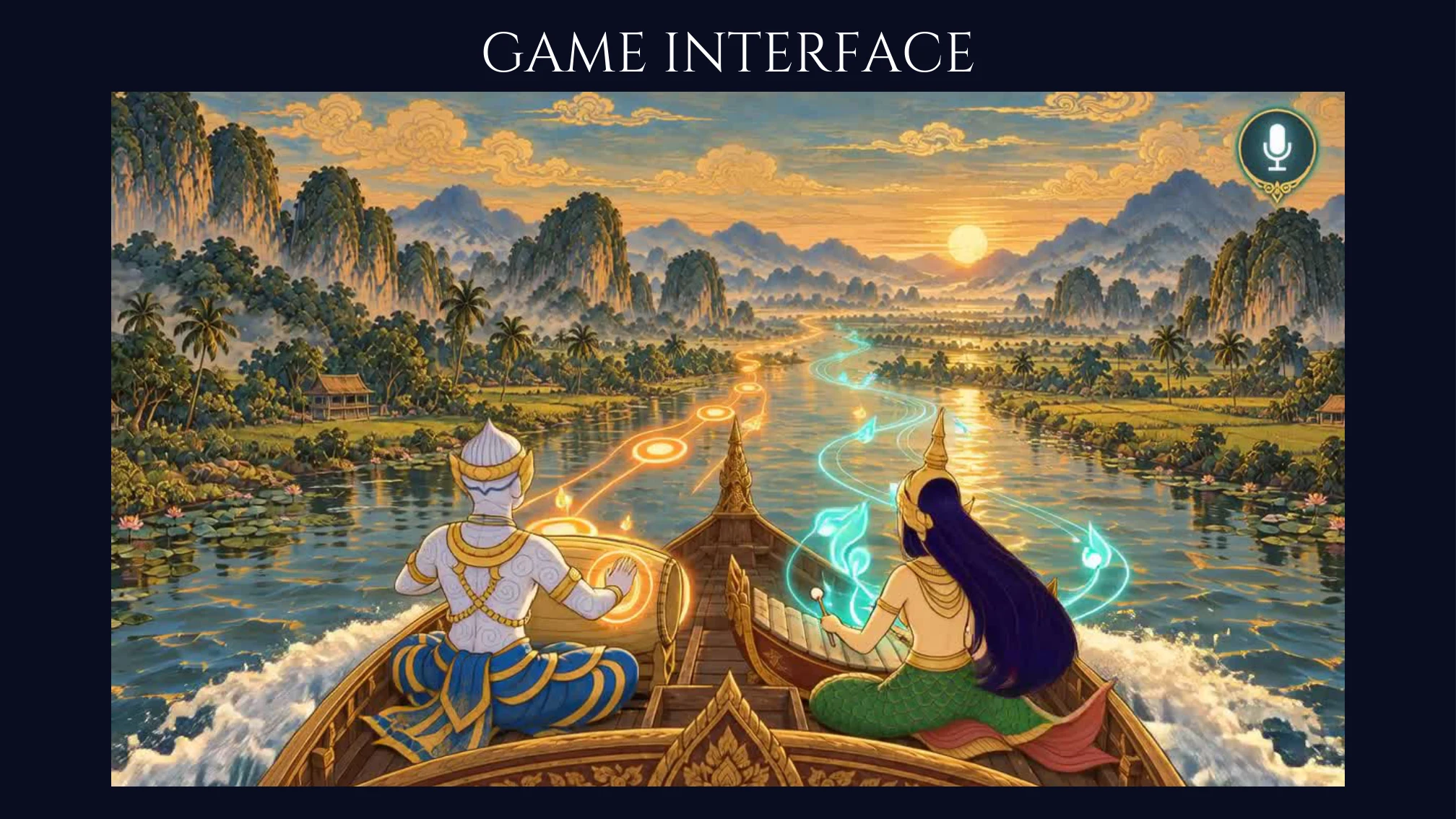
The interface imagines both players performing inside the same landscape while their musical actions move the story forward.
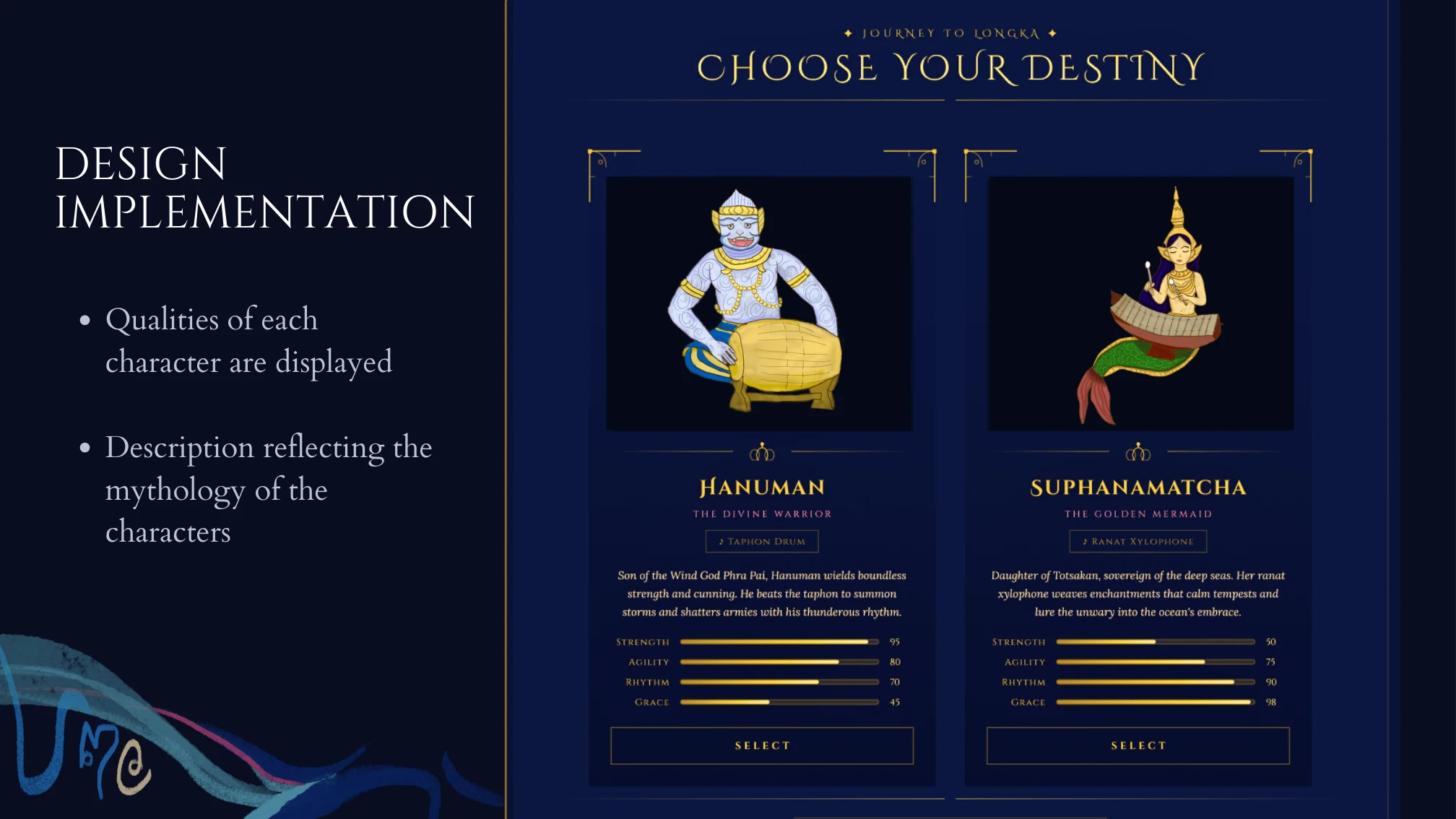
Character selection introduces each player’s instrument, controls, and place in the shared narrative.
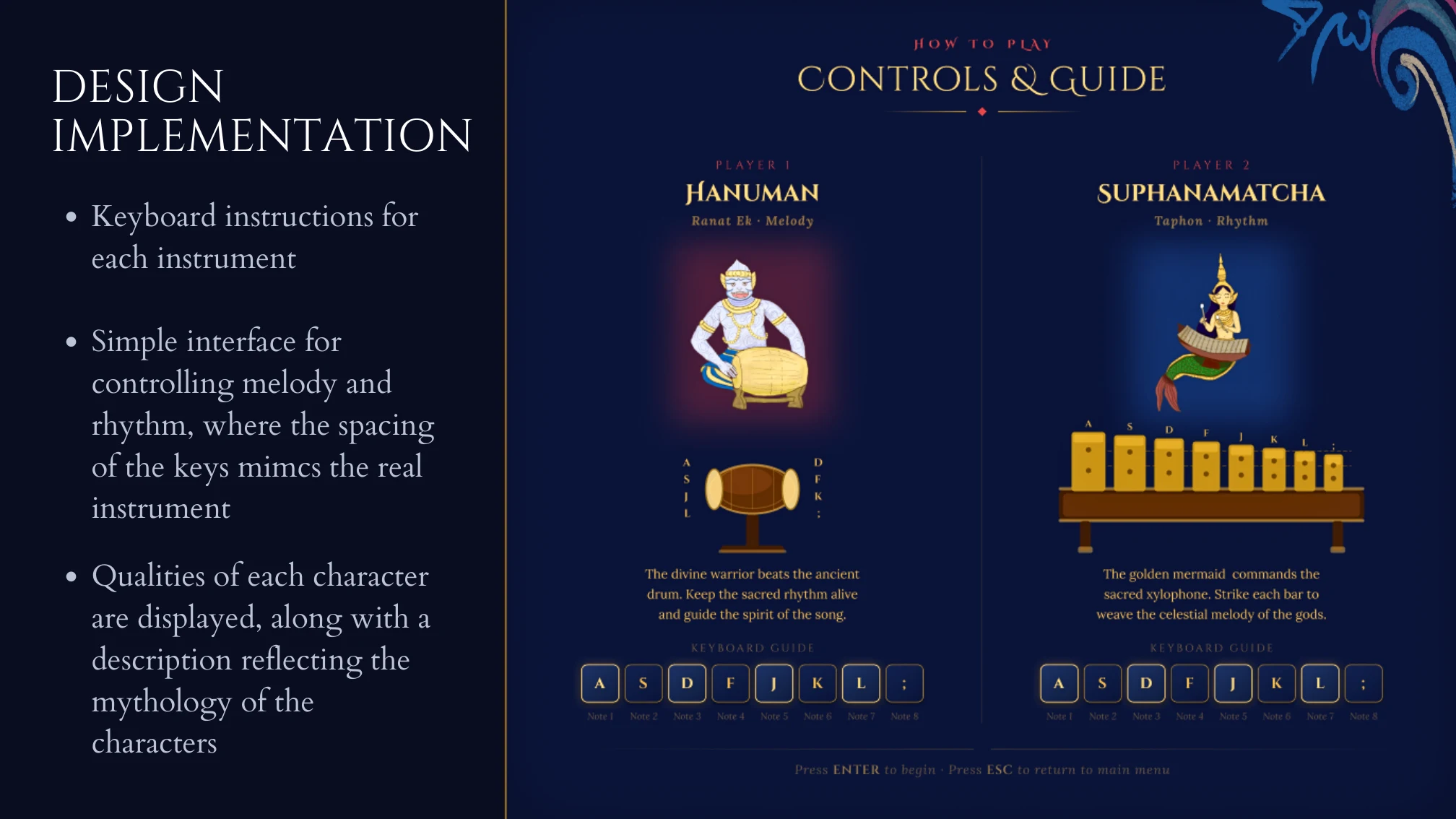
Keyboard mappings translate the taphon and ranat ek into approachable rhythm and melody interactions.
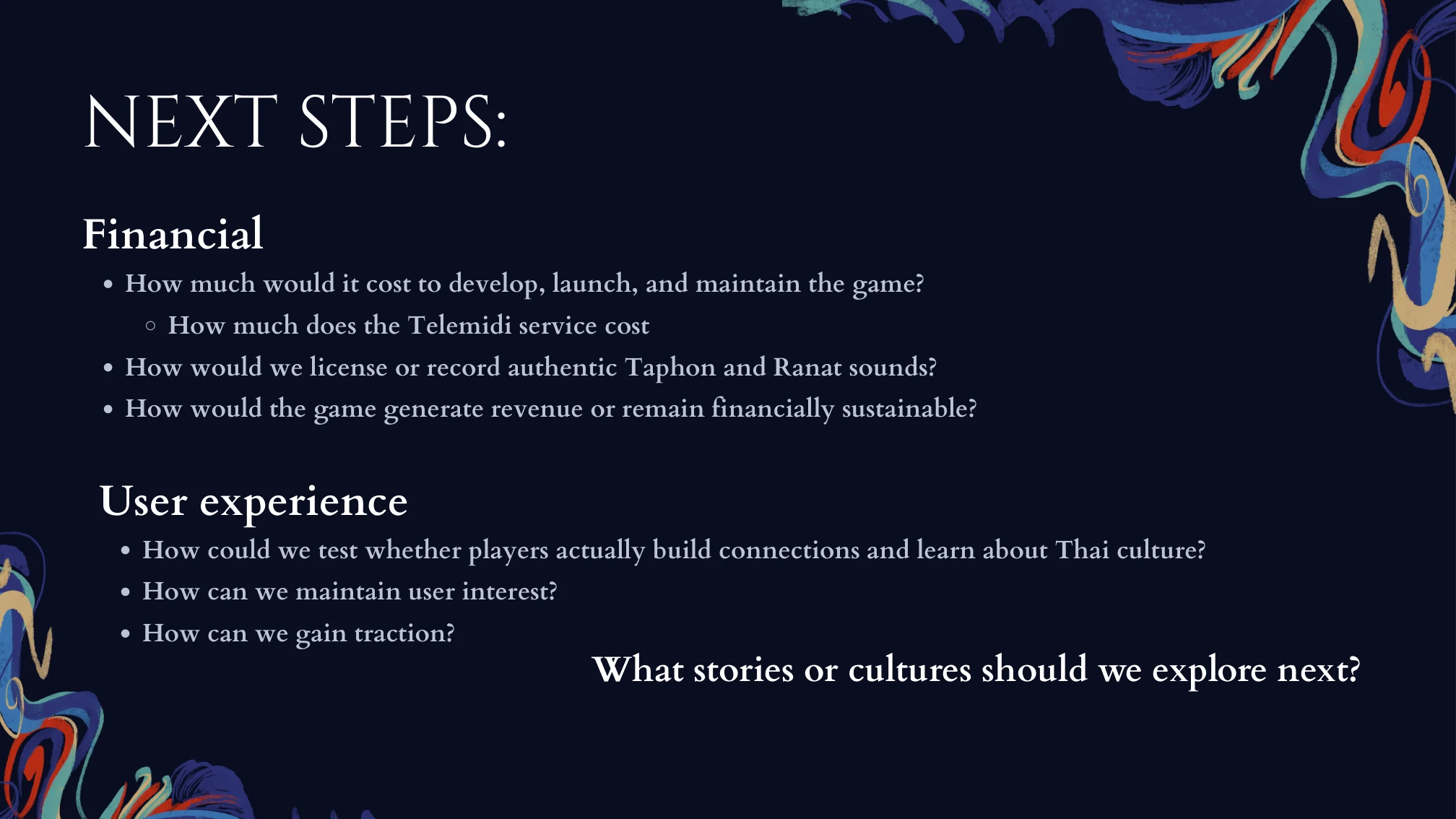
The team identified open questions around development, licensing, cost, player retention, cultural learning, and the business model.
Browse the original 13-slide deckOpen the complete presentation viewer
Original team presentation. The “Meet our users” quotes are illustrative presentation scenarios, not verified user-test findings.
The questions we still need to answer.
Next, we need to understand development and Telemidi costs, authentic instrument-sound licensing, and a sustainable business model. We also need to test whether the experience helps people connect and learn, and what keeps them coming back.
For me, the interesting question is how a cultural story can become something people experience together, rather than only read about.